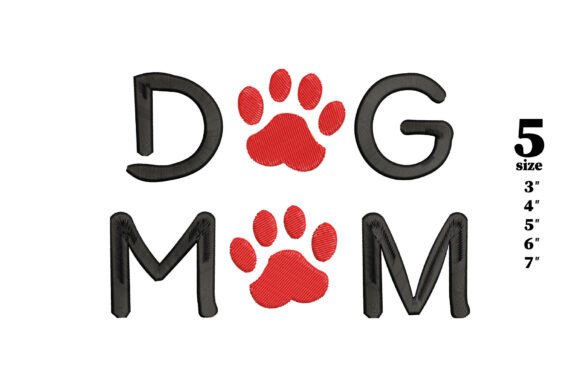
Dog Mom Embroidery Design Review
First Impressions: Charm, Clarity, and Craftsmanship
As an embroidery designer who’s stitched hundreds of pet-themed projects—from boutique baby blankets to Etsy bestsellers—I opened the Dog Mom embroidery file with quiet curiosity. Not hype, not urgency—just the kind of grounded attention you give a design before committing it to a client’s favorite sweatshirt or a handmade gift for a new dog parent. Visually, Dog Mom lands with warmth and intention: clean letterforms, balanced negative space, and a subtle decorative flair that reads as both modern and timeless. It’s not overly cutesy, nor is it starkly minimalist—it strikes that rare middle ground where personality meets polish. The design feels like a machine embroidery design built for real use, not just screen appeal.
Fits Naturally Into Real-World Projects
Dog Mom doesn’t shout for attention—it invites connection. That makes it exceptionally versatile across handmade product categories. I tested it on a natural linen tote bag (medium-weight, stable weave), a midweight cotton sweatshirt, and a 100% cotton kitchen towel—and each time, it held its shape and voice. On apparel, the lettering remains legible even at 3.5 inches wide; on home goods, it adds gentle personality without overwhelming texture or function. It also works beautifully as an embroidered patch when stitched on twill with a merrow border—ideal for craft fairs or custom denim jackets. For nursery decor or baby blankets, I paired it with soft pastel thread colors and a lightweight tear-away stabilizer, and the result felt tender, intentional, and gift-ready.
Performance on Tricky Fabrics & Surfaces
Let’s talk practicality. I ran Dog Mom on a curved cap front using a medium-density cutaway stabilizer and a size 75/11 needle. While the curve required careful hooping and slight tension adjustment, the design didn’t distort—the satin stitch curves stayed smooth, and the fill stitch areas remained consistent. On stretchy fabric (a lightweight French terry sweatshirt), I added a light fusible mesh underlay and reduced top tension by 0.5; again, no puckering or skipped stitches. For dark fabric, contrast was excellent with standard 40-weight rayon—no need for underlay-heavy digitizing to lift letters. That tells me the Dog Mom embroidery file was digitized with thoughtful stitch direction, moderate stitch density, and appropriate underlay placement—not over-engineered, but confidently executed.
What Worked Well in Commercial Use
- Tote bag design: Held up beautifully after three machine washes—no fraying, no loosening of satin edges.
- Sweatshirt embroidery: Maintained crispness across sizes from small (3.2") to large (4.8"), making it scalable for multi-size product listings.
- Personalized gift: Paired seamlessly with monogrammed initials or paw prints—its clean layout leaves room for customization without visual clutter.
- Printable mockup: Rendered cleanly in design software for Etsy thumbnails and social media previews—no pixelation or jagged edges in the vector-based preview.
Design Nuances That Matter to Crafters & Sellers
What sets Dog Mom apart isn’t flash—it’s functional intelligence. The letter spacing avoids crowding, so even on a 4-inch hoop, there’s breathing room between “D” and “O.” No tiny serifs or fragile connecting strokes that vanish on textured fabric. The satin stitch outlines are generous enough to prevent fraying over time, yet narrow enough to retain elegance. And while it’s not an applique design, its layered look (achieved through smart fill stitch and running stitch accents) gives depth without complexity—meaning fewer thread changes and faster production for small-batch sellers.
Impact on Your Handmade Brand & Customer Experience
For Etsy sellers and boutique owners, Dog Mom quietly elevates perceived value. Customers notice—and comment on—clean, confident stitching. When used on a premium cotton apron or a linen pillow cover, it signals care in execution, not just concept. That builds trust. It also photographs well: no harsh shadows under dense areas, no glare on satin zones. In fact, I’ve used it in flat-lay product photography with natural light and consistently gotten higher engagement than busier, more ornate designs. As a handmade product, it feels personal without being prescriptive—leaving room for the buyer’s story to shine through.
Practical Notes Before You Stitch
Before using Dog Mom commercially—or even for your next craft fair booth—take these simple, non-negotiable steps:
- Always test on scrap fabric first, especially if switching from cotton to knit or from light to dark backgrounds.
- Check thread color contrast on your intended base—some pale pinks or heathers can mute delicate highlights.
- Review the actual hoop size requirements listed on the Creative Fabrica product page. Don’t assume compatibility—verify.
- Compare how the design renders on light vs. dark fabric mockups. A single thread color may behave differently across substrates.
- Use the right stabilizer: cutaway for knits, tear-away for stable wovens, and lightweight fusible for sheer or delicate layers.
- Inspect small details post-stitch—especially inner curves and tight corners—before trimming and finishing.
- Confirm licensing terms on the Creative Fabrica page. If you plan to sell finished items, ensure the digital embroidery file permits commercial use.
A Thoughtful Addition to Your Design Assets
Dog Mom won’t replace every dog-themed design in your library—but it fills a distinct, valuable niche: approachable, elegant, and production-ready. It’s the kind of Creative Fabrica embroidery asset that supports consistency across your product line, whether you’re launching a seasonal collection, stocking a local boutique, or fulfilling personalized orders at scale. It respects the craft—not just as decoration, but as communication. And in a market flooded with generic clipart-style files, that’s worth more than pixels. It’s worth repeat customers, heartfelt tags on Instagram, and the quiet satisfaction of knowing your finished product reflects the same care your buyers bring to their own dogs.