Scalloped Heart Bow Valentine
A Craft Fair Designer’s First Look: Romantic, Textured, and Booth-Ready
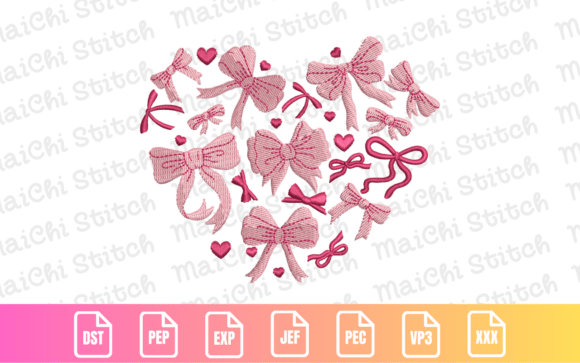
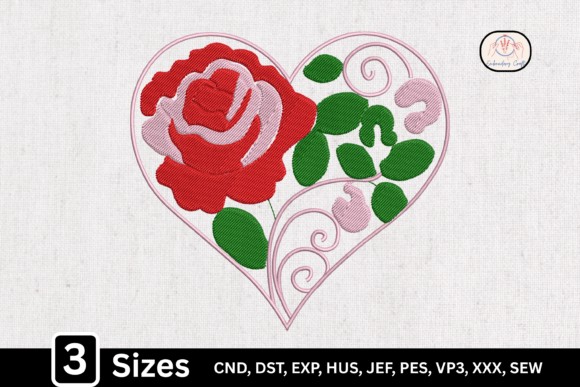
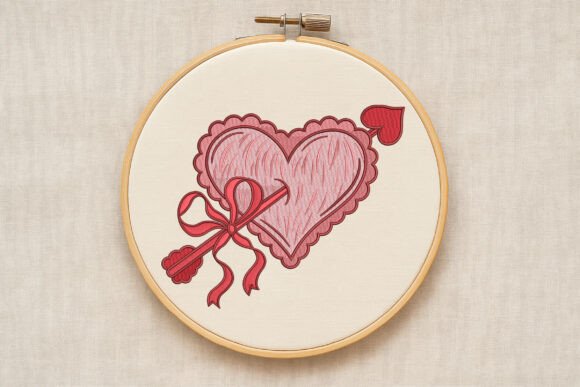
As an embroidery designer who’s prepped over 200 craft fair booths—and shipped thousands of handmade products—I opened the Scalloped Heart Bow Valentine file with one question in mind: “Will this stop someone mid-aisle?” The answer is yes—when placed right. This isn’t a loud, glitter-burst design. It’s soft romance with structure: a scalloped, textured heart pierced by Cupid’s arrow, delicately adorned. It reads as elegant but approachable—neither too dainty nor overly ornate. Think farmhouse charm meets vintage valentine, not cartoonish or kitschy. That balance makes it ideal for small shop products targeting thoughtful givers, not mass-market impulse buyers.
Where It Shines on Real Craft Fair Products
The Scalloped Heart Bow Valentine thrives where texture and intention meet. On a linen tea towel? Perfect—its scalloped edge echoes natural fabric grain, and the arrow adds subtle movement. As apron embroidery centered just below the pocket? Strong visual anchor—especially when stitched in muted rose or charcoal thread on oatmeal canvas. As a small embroidered patch (2.5”–3”) on a denim tote bag? Highly effective. Customers notice it instantly—not because it’s huge, but because the heart’s shape stands out against clean fabric. It also works beautifully on pillow covers and fabric pouches, where the scalloping reads as intentional craftsmanship, not filler detail.
It’s less effective on curved cap surfaces unless resized and re-digitized for stability—the arrow tip and inner scallops risk distortion. And while it’s charming on a printable mockup for Etsy listings, avoid using it smaller than 2.75” wide in final production; tiny stitch clusters in the heart’s inner texture can blur on dark fabric or dense weaves.
Production Practicality: Batch-Friendly or Fussy?
This machine embroidery design leans toward batch-friendly—if you test first. Its layout is intuitive: one cohesive motif, no floating elements or layered appliqué steps. That means faster hooping, fewer restarts, and consistent results across tote bags, tea towels, and patches. But don’t skip the stabilizer check. The textured heart has moderate stitch density—enough to read clearly on medium-weight cotton, but it’ll pucker on thin knits or slip on terry cloth towels without cutaway or tear-away backing. Use a light-to-medium weight cutaway for kitchen linens, and a fusible lightweight for patches destined for iron-on application.
Hoop size matters here. If your file includes multiple sizes, confirm the smallest version fits comfortably in a 4x4 hoop—critical for quick turnaround at a busy craft fair. Also verify spacing between the heart and arrow; tight gaps may collapse on textured towels or thick fabric, turning “romantic” into “muddy.” Always run a test on scrap fabric matching your final product’s weight and weave.
Visual Impact & Customer Engagement
In person, the Scalloped Heart Bow Valentine performs best as a focal point—not background filler. At 3.5”–4.5”, it commands attention on booth displays: think folded tea towels fanned open, aprons draped over a rustic ladder shelf, or pouches stacked beside handwritten gift tags. Its scalloped outline catches light differently than flat shapes, adding dimension under market tent lighting. That subtlety builds perceived value: customers associate that texture with hand-finished quality, even though it’s machine-stitched.
For Etsy sellers, this design photographs exceptionally well—especially with soft shadows and neutral backdrops. Its clear silhouette and balanced negative space make it easy to crop, scale, and integrate into digital branding. Pair it with warm-toned thread colors (dusty rose, slate gray, cream) and it reads as premium without screaming “expensive.” That consistency strengthens brand identity across your small shop product line—whether you’re selling embroidered market bags today or launching a Valentine S Day capsule collection next year.
Careful-Use Notes Every Embroidery Designer Should Know
- Dense areas: The inner scalloping and arrow shaft hold more stitches—watch for thread buildup on dark fabric or low-thread-count cotton.
- Fabric texture: Avoid heavy terry, bouclé, or loosely woven burlap unless you add extra stabilizer and reduce top tension.
- Small details: Don’t shrink below 2.5”. The arrow’s tip and heart’s inner curves lose definition fast.
- Curved surfaces: Caps and curved mugs require digitized adaptations—don’t assume the flat-file version will translate cleanly.
- Thread contrast: On black or navy fabric, use matte metallic or high-contrast pastel thread—not ecru—to preserve legibility.
Final Designer Checklist Before You Stitch
- Test the Scalloped Heart Bow Valentine embroidery file on scrap fabric matching your final product’s weight, weave, and color.
- Check thread contrast—hold stitched samples 3 feet away. Does the heart pop? Does the arrow read as distinct—or just a blur?
- Review spacing and stitch density. Are inner scallops separating cleanly? Does the arrow sit confidently within the heart?
- Confirm hoop size compatibility with your most-used hoops—especially if stitching on-the-go at a craft fair.
- Use the correct stabilizer: cutaway for towels and aprons, fusible lightweight for patches, and tear-away for smooth cotton totes.
- Create at least one real mockup—not just a digital preview. See how it drapes, folds, and catches light in natural light.
- Compare fabric colors side-by-side: a cream thread on ivory linen reads warmer than on oatmeal; slight shifts affect mood and market appeal.
- Verify commercial licensing terms before selling finished products—this is non-negotiable for Etsy sellers and boutique makers.
The Scalloped Heart Bow Valentine isn’t just another Valentine S Day embroidery—it’s a versatile, emotionally resonant design asset. When executed with care, it elevates a simple tote bag into a giftable keepsake and turns a plain tea towel into a conversation starter. For embroidery business owners and handmade shop owners, it’s proof that romantic doesn’t have to mean repetitive—and that thoughtful digitizing, smart fabric pairing, and real-world testing are what turn a digital embroidery file into a craft fair bestseller.