Folk Border Embroidery Design
First Impressions: A Quiet, Confident Charm
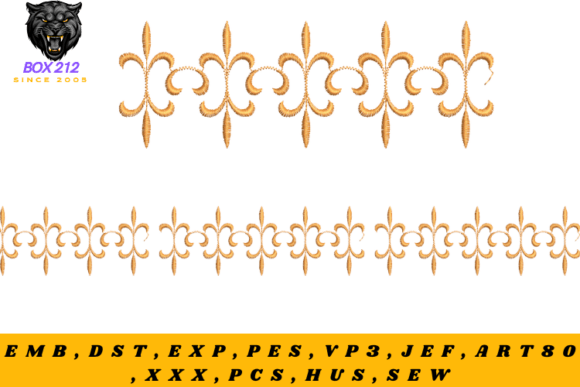
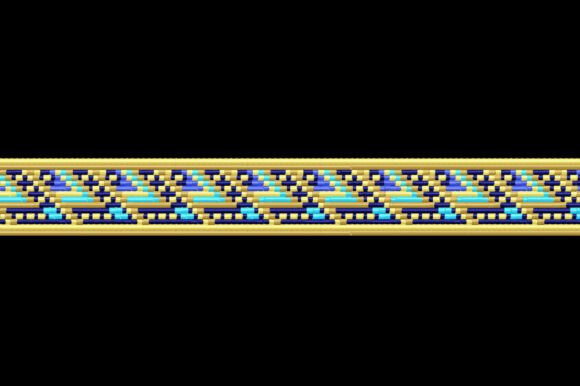
Opening the Folk Border Embroidery Design file feels like flipping through a well-worn sketchbook of Eastern European folk motifs—geometric yet organic, rhythmic but never rigid. It’s not loud or trendy; it’s grounded. The border layout suggests repetition without monotony: small floral clusters, interlocking vines, and subtle geometric anchors spaced just far enough apart to breathe. There’s no dense fill stitch overwhelming the eye—instead, a thoughtful balance of satin stitch outlines, delicate running stitch accents, and open negative space. This isn’t a design that shouts from a shelf. It whispers intention—and that’s exactly why it works so well for handmade products meant to feel personal, not mass-produced.
A Real Project Test: Embroidering a Linen Kitchen Towel
Last week, I used the Folk Border Embroidery Design on a set of heavyweight linen tea towels for a local boutique’s spring launch. Hooped with medium tear-away stabilizer (no cutaway needed), stitched in matte cotton thread on natural unbleached fabric—the result was warm, tactile, and quietly sophisticated. Customers didn’t just notice the embroidery; they *touched* it. That’s the sign of a border design doing its job right: supporting the item, not competing with it. The rhythm of the pattern wrapped cleanly around the towel’s hem without warping or puckering, even where the fabric curved slightly at the corners. No redesigning, no re-hooping—just clean, confident execution.
Where It Shines (and Where It Asks for Care)
The Folk Border Embroidery Design thrives on stable, medium-weight fabrics: cotton canvas for tote bags, brushed cotton for baby blankets, twill for aprons, and fleece-backed sweatshirts for relaxed-fit embroidery. On these surfaces, the stitch density stays balanced—enough coverage to read clearly, but not so dense that it stiffens the fabric or risks shadowing on dark backgrounds.
- Great for: Custom apparel (especially sleeve or cuff borders), embroidered patches (when digitized with clean underlay), pillow covers with mitered corners, holiday kitchen linens, nursery wall hangings, and boutique-branded tea towels.
- Use thoughtfully on: Stretchy knits (pre-stabilize heavily), thin voile or silk (add lightweight cutaway + topping), curved cap fronts (test alignment first), and tightly woven dark fabrics (check thread contrast—matte black on navy can disappear).
It’s not an applique design—it relies on precise satin and fill stitch execution. So if you’re planning tiny lettering inside the border or adding fine interior details later, know that the original Folk Border Embroidery Design doesn’t include those. It’s a standalone border, designed to frame—not fill.
What It Does for Your Craft Business
As an Etsy seller and small shop product developer, I judge embroidery files not just by how they stitch—but by how they land with real customers. This one builds trust. When someone sees a hand-finished linen napkin edged with the Folk Border Embroidery Design, they don’t think “machine-made.” They think “carefully chosen,” “intentionally made,” “worth the price.” That perception lifts perceived value—especially for personalized gifts and wedding-related items like guest towel sets or baby onesie borders.
It also supports brand consistency beautifully. Because the motif is distinctive but not overly literal (no animals, no slogans, no seasonal clichés), it adapts across collections—spring botanicals, autumn harvest themes, winter neutrals—all while holding the same visual voice. And for digital product sellers? Its clean, repeatable structure makes it ideal for printable mockups. One well-shot photo of the Folk Border Embroidery Design on a cream towel translates instantly into five different shop banners, listing thumbnails, and social posts.
Designer Notes You’ll Actually Use
Before stitching your first finished product—or listing it for sale—here’s what I always do with the Folk Border Embroidery Design:
- Run a test on scrap fabric *exactly* like your final material—including wash-and-dry if the item will be laundered.
- Check thread color contrast on both light and dark fabric swatches—especially if offering custom colorways to clients.
- Review stitch density visually: zoom into the .dst or .pes preview. Are the vine stems too thin? Do floral centers hold shape, or do they vanish on low-res machines?
- Confirm hoop size compatibility. Some versions of this border tile across larger hoops; others are optimized for 4x4. Don’t assume—verify before prepping client files.
- Inspect small details at 200% zoom: running stitch spacing, corner transitions, and start/stop points. A single misplaced jump stitch can ruin the flow on a narrow cuff.
- Test in black-and-white mockups. If it reads clearly without color, it’s ready for branding use.
- Use proper stabilizer—medium tear-away for most cottons, lightweight cutaway for knits or sheer layers.
- Double-check licensing. Since this is a digital embroidery file, confirm whether commercial use (e.g., selling finished embroidered totes) is permitted—and whether resale of the digital file itself is allowed.
Final Thought: A Border That Holds Space—Not Just Fabric
The best borders don’t just finish an edge—they complete a feeling. The Folk Border Embroidery Design does that. It’s the kind of embroidery file I reach for when I want my handmade product to say, “This was made with attention—not just effort.” Whether you’re stitching baby onesies for a new parent, updating your craft fair lineup, or building a cohesive line of embroidered home goods, this border doesn’t distract. It dignifies. And in a market flooded with fast, flashy designs, that quiet confidence is rare—and valuable.