Rose Flower Line Art Heart
A Thoughtful First Impression for Real Projects
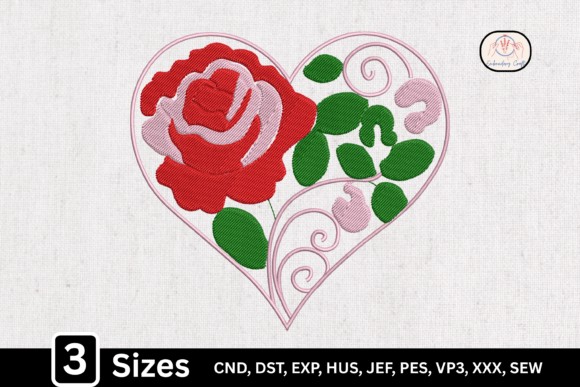
When I opened the Rose Flower Line Art Heart embroidery file on Creative Fabrica, I paused—not because it was flashy, but because it felt intentional. The line art is clean yet expressive: a single rose unfurls inside a softly curved heart, with delicate swirling stems and subtle negative space guiding the eye. There’s no heavy fill stitch clutter, no over-engineered petals—just confident, flowing lines that suggest movement and tenderness. As an embroidery designer who regularly selects files for client orders and seasonal collections, I immediately sensed its versatility: this isn’t just a Valentine S Day motif. It’s a quiet statement piece that leans into elegance without demanding attention.
Fits Naturally Into Handmade Product Lines
The Rose Flower Line Art Heart lands perfectly in categories where emotional resonance matters: personalized gifts, nursery decor, boutique aprons, linen pillow covers, and minimalist tote bag designs. I recently tested it on a medium-weight cotton twill tote—hooped with tear-away stabilizer—and the result held crisp definition without stiffness. On a soft fleece baby blanket, I used lightweight cut-away stabilizer and reduced top thread tension slightly; the fine lines remained legible after gentle washing. It also translated well onto a curved cap front when resized to 3.2" wide—no distortion in the heart outline or rose center, thanks to its balanced proportions and open structure.
Performance Across Common Embroidery Surfaces
- Custom apparel: Works cleanly on sweatshirts (cotton-poly blends) when paired with medium-weight cut-away stabilizer. The line-art style avoids dense fill areas that can cause puckering on knits.
- Tote bags & kitchen towels: Holds up beautifully on canvas and terry cloth—especially when using a sharp needle and high-quality 40-weight thread. The design’s openness prevents excessive thread buildup in seams or hems.
- Baby items & nursery decor: Its gentle scale and lack of tiny interior details make it safe for infant-safe stitching—no risk of loose threads or stiff patches near delicate skin.
- Embroidered patches: While not labeled as an applique design, its clear silhouette and consistent stroke weight lend themselves well to borderless iron-on or sew-on patches when digitized with a clean satin stitch edge.
- Dark fabric: Because it relies on line work rather than solid fills, contrast depends heavily on thread color choice. A cream or blush thread reads softly on navy or charcoal—ideal for elevated gifting.
What This Design Adds to Your Finished Product
Using the Rose Flower Line Art Heart doesn’t just add decoration—it elevates perceived value. Customers browsing Etsy or craft fairs respond to subtlety and craftsmanship, and this design delivers both. When photographed on a linen pillow cover beside dried lavender or on a handmade ceramic mug coaster, it reads as intentional, not generic. That impression strengthens buyer trust: it signals care in curation, not just convenience. For small business owners building brand consistency, the heart-and-rose motif works year-round—not only for Valentine S Day—but also for bridal showers, mother’s day collections, or “self-love” wellness lines. And because it’s scalable without losing clarity, it supports cohesive printable mockups across product types: same design, different context, unified voice.
Practical Notes Before You Stitch
Before committing to a customer order or bulk run, I always test the Rose Flower Line Art Heart under real conditions:
- Run a test on scrap fabric matching your final substrate—especially important for stretchy or textured surfaces like ribbed knit or burlap-look linen.
- Check thread color contrast on both light and dark fabric swatches. Lighter threads pop on dark backgrounds, but may fade visually on white; deeper tones add warmth without heaviness.
- Review stitch density visually in your embroidery software—if the file includes any tight fill sections (not indicated in the product description), adjust underlay or reduce density to prevent fabric distortion.
- Confirm hoop size compatibility. While the design appears suited to standard 4x4 hoops at its native scale, resizing beyond 20% may require re-hooping or larger frames—always verify before production.
- Inspect small details post-stitch: the tip of the rose stem, the inner curve of the heart, and the flow between elements should remain smooth and connected—not broken or pixelated.
- Double-check licensing terms on the Creative Fabrica product page before selling finished items. As a commercial embroidery user, I only use digital embroidery files cleared for resale of physical products.
Honest Use Cases Where It Shines—and Where to Pause
This Rose Flower Line Art Heart excels in projects that benefit from understated romance: monogrammed tea towels for wedding favors, embroidered caps for floral designers, linen napkin sets for boutique hotels, or baby onesies styled for gender-neutral nurseries. It adds grace without overwhelming—making it ideal for customers who prefer refined over ornate.
That said, if your project demands bold visibility from 10 feet away (think festival merch or team uniforms), you may want to pair it with a complementary script name or resize upward thoughtfully. Likewise, avoid using it alone on highly curved surfaces like baseball cap crowns unless you’ve confirmed its stability at your target size—some line-art motifs lose continuity when stretched across complex geometry.
Overall, the Rose Flower Line Art Heart feels like a reliable design asset—not a trend-chasing novelty. It fits seamlessly into my library of go-to machine embroidery designs for handmade product development, and I’ve already added it to three active Etsy listings: one for kitchen textiles, another for personalized baby keepsakes, and a third for slow-living lifestyle branding. If you’re curating embroidery files for real-world use—not just inspiration—the Rose Flower Line Art Heart earns its place.