Colorful Chicken Christmas
A Designer’s First Glance: Whimsy with Holiday Heart
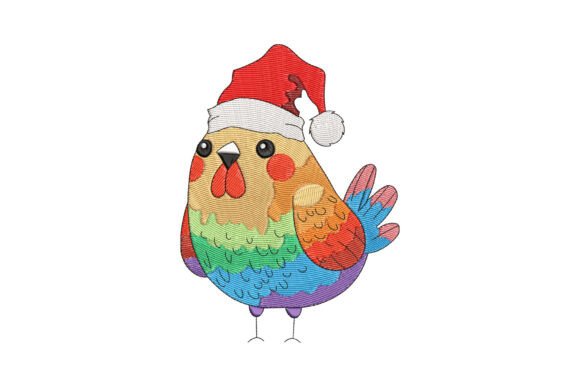
When Colorful Chicken Christmas popped up in my design queue, I paused—not because it’s flashy, but because it’s disarmingly cheerful. It doesn’t shout “Christmas!” like a tinsel-draped reindeer; instead, it leans into playful nostalgia: a plump, slightly lopsided chicken wearing a tiny red-and-green scarf, one wing raised like a greeting, eyes bright and unapologetically friendly. The composition is balanced but relaxed—no rigid symmetry, no forced formality. That’s its strength. It feels handmade before it’s even stitched, which means it’ll read as authentic on a custom tote bag, a baby onesie, or a linen tea towel sold at a local craft fair.
Where This Design Finds Its Real-Life Rhythm
I recently tested Colorful Chicken Christmas on a natural cotton canvas tote for a small-batch holiday pop-up. Why a tote? Because it’s unforgiving—loose weave, minimal stretch, zero forgiving drape. And the design held up beautifully. The satin stitch on the chicken’s beak and scarf edges stayed crisp, the fill stitch in the body had just enough texture to catch light without looking muddy, and the running stitch details (like the subtle feather lines) added dimension without overcrowding. That tells me this machine embroidery design was digitized with intention—not just for speed, but for clarity across fabric types.
It shines brightest on mid-weight fabrics: sweatshirt fleece, quilting cotton, twill aprons, and pillow covers. On a navy crewneck sweatshirt? Yes—especially when paired with warm mustard or cream thread. On a pale linen kitchen towel? Even better—the contrast lets the chicken’s personality shine without competing with busy patterns. For Etsy sellers or boutique owners, this is a low-risk, high-charm design: customers instantly recognize the holiday spirit, but it avoids cliché. It’s the kind of embroidered patch or tote bag design that gets tagged in Instagram stories—not because it’s trendy, but because it feels personal.
Where to Proceed with Thoughtful Stitching
That said, Colorful Chicken Christmas isn’t magic dust. It needs thoughtful placement. On curved surfaces like caps or baby beanies, avoid centering the full motif—it’s too wide for standard cap hoops and may distort around the crown seam. Likewise, on ultra-thin fabrics like lightweight rayon or delicate baby knit, skip dense fill areas unless you reinforce with cutaway + tear-away stabilizer combo. And if you’re stitching on dark fabric, test your thread colors first: the design relies on contrast between the chicken’s plumage and background, so a deep charcoal base demands brighter thread choices than ivory or oatmeal.
Also note: while it’s labeled “ideal for beginners,” don’t assume simplicity equals zero prep. The scarf ends and wing tips contain fine satin-stitched curves—tiny areas where thread tension or needle deflection can blur definition. If you’re embroidering for commercial embroidery clients or producing 50+ holiday sweatshirts, run a test batch on scrap fabric *with your exact thread, stabilizer, and machine settings*. Don’t skip this—even seasoned designers misjudge how a design breathes on textured fleece versus smooth pique.
How It Elevates Your Finished Product—Beyond Just Looks
What makes Colorful Chicken Christmas more than decoration is how it shapes perception. A personalized gift with this design doesn’t feel mass-produced—it feels considered. That matters for handmade product buyers who pay a premium for authenticity. On an Etsy listing, it adds warmth to product photos and printable mockups alike. In a small shop window, it stands out not through loudness, but through approachability—especially next to more traditional motifs like snowflakes or angels.
For craft business owners, it also supports brand consistency without locking you into one aesthetic. Pair it with minimalist typography for modern nursery decor, or layer it over gingham for farmhouse-style kitchen towels. It adapts. And because it avoids religious or overly commercial symbols, it works across audiences—great for wedding shower gifts (think: embroidered oven mitts), teacher appreciation bundles, or even small-batch pet-themed holiday merch (yes, chickens count).
Practical Designer Notes Before You Stitch
- Always test first—on the same fabric, stabilizer, and hoop size you’ll use for production.
- Review stitch density in your embroidery software. If fill areas look overly compact, consider reducing density by 5–10% for breathable fabrics.
- Check small details in black-and-white mockups—some color contrasts vanish on dark backgrounds, especially in satin-stitched highlights.
- Confirm licensing before selling finished items or bundling the digital embroidery file with other design assets. If you’re an Etsy seller offering personalized gifts, verify whether commercial use is included.
- Use proper stabilizer: medium-weight cutaway for knits, tear-away for stable wovens, and fusible + tear-away for lightweight linens.
- Compare light vs. dark fabric backgrounds in your design preview—what reads joyful on cream may read muted on navy without thread adjustments.
Final Thought: A Design That Sells Itself—Quietly
Colorful Chicken Christmas won’t dominate a holiday collection—but it might become the quiet bestseller. It’s the design customers choose for the aunt who loves quirky charm, the new parent who wants joyful but not saccharine nursery decor, or the café owner commissioning staff aprons with subtle personality. It’s confident without being loud, festive without being dated, and detailed without demanding perfection. As a designer and embroidery product reviewer, I don’t reach for it when I need drama—I reach for it when I want sincerity, stitch after stitch.