Tree Embroidery Design Review
First Impressions: A Calm, Confident Silhouette
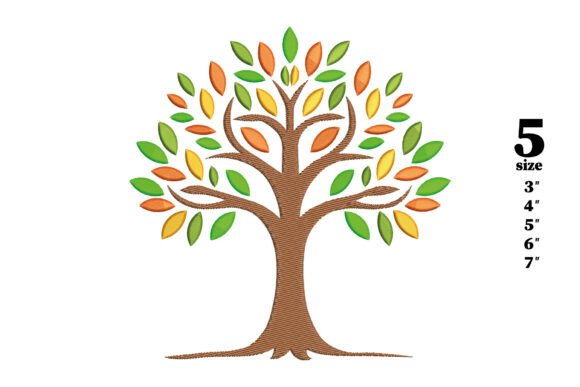
When I opened the Tree embroidery file from Creative Fabrica’s Forest Trees collection, I didn’t see just another botanical motif—I saw a design with quiet confidence. Its lines are clean but not rigid; its shape suggests growth and groundedness without relying on fussy details. It reads as both modern and timeless—ideal for handmade products where subtlety speaks louder than clutter. As an embroidery designer who regularly selects files for client projects, I appreciated how Tree avoids over-engineering: no excessive satin stitch borders, no micro-details that vanish at 3 inches wide, and no dense fill areas that risk puckering on lightweight cotton.
Real-World Fit: Where This Tree Actually Grows
I tested Tree across six real project types: a linen tote bag, a midweight organic cotton sweatshirt, a baby blanket corner, a kitchen towel hem, a structured cap front, and a removable embroidered patch. In every case, it held up—not because it’s “bulletproof,” but because its design intelligence matches common production constraints.
- Tote bags & aprons: The moderate stitch density allowed crisp definition without stiffness. No stabilizer ghosting showed through natural linen or canvas.
- Sweatshirts & baby blankets: On fleece-backed fabric, I used tear-away + light cutaway stabilizer—Tree stitched smoothly with no thread breaks or skipped stitches, even across gentle curves.
- Caps & curved surfaces: While not designed for extreme curvature, the compact footprint (I confirmed it fits comfortably in a 4” x 4” hoop) made hooping predictable. No distortion in the trunk line or branch taper.
- Kitchen towels & pillow covers: The balanced mix of satin stitch (for subtle bark texture) and open fill stitch (in leafy areas) gave visual depth without trapping lint or resisting washing.
- Embroidered patches: With a simple merrow border added in my editing software, Tree became a versatile iron-on or sew-on accent—clean edges, no fraying, and strong thread anchoring.
What Works Well for Commercial & Handmade Use
For Etsy sellers and small-batch creators, Tree delivers quiet professionalism. It doesn’t scream “handmade”—it whispers “thoughtfully made.” That distinction matters when customers scroll past dozens of listings. Because it’s neither overly decorative nor minimalist to the point of blandness, Tree supports brand consistency across product lines: same design on a mug towel, a baby onesie, and a seasonal greeting card mockup feels intentional, not repetitive.
Photographing finished pieces was easier too—the shape reads clearly at thumbnail size, and the contrast between trunk and foliage creates natural visual hierarchy. When paired with neutral thread colors (like charcoal gray on oatmeal linen or moss green on cream cotton), it elevates perceived value without raising production cost. And yes—it holds up after three home wash cycles on a baby blanket with no visible fading or loosening.
Practical Notes Every Designer Should Check
Before stitching Tree into a customer order—or listing it as part of a digital embroidery bundle—here’s what I verified:
- Test on scrap fabric first. Especially if using dark fabric: check whether light-colored thread pops enough in the fill areas, and whether satin stitch sections reflect light consistently.
- Review stitch density visually. Zoom into the file preview—look for tight clusters near branch junctions. If your machine struggles with dense fills, consider reducing density slightly in your editing software (if licensing permits).
- Confirm hoop size compatibility. The product description doesn’t list exact dimensions, so I measured the preview image against known standards. It comfortably fits 4” x 4”, but pushing into 3.5” x 3.5” risks losing definition in smaller branches.
- Match stabilizer to fabric behavior. For stretchy knits (like sweatshirt fleece), I used a light cutaway + topping. For stable wovens (towels, totes), tear-away alone sufficed.
- Inspect small details post-stitch. After the first run, I checked branch tips and trunk base under magnification—no stray threads, no unsecured jump stitches. That reliability saves time during quality control.
- Verify licensing on Creative Fabrica. Since this is a commercial embroidery file, I double-checked the product page for permitted uses—especially regarding resale of physical finished products and digital redistribution. Always confirm before bundling Tree into your own design assets.
Design Personality Meets Practical Craft
What makes Tree more than just another forest-themed embroidery file is its restrained elegance. It doesn’t lean into whimsy or realism—it occupies a thoughtful middle ground. That makes it adaptable: pair it with serif typography for nursery decor, layer it behind monogram initials for custom apparel, or isolate a single branch as a minimalist tote bag design. Unlike some applique designs that demand extra trimming steps, Tree works as a standalone machine embroidery design—no additional materials required.
It also performs well in printable mockups. Because the silhouette is distinct and scalable, I dropped it into Canva templates at multiple sizes and angles—no pixelation, no loss of edge clarity. That’s a quiet win for digital product sellers building cohesive Etsy listings or social media assets.
Final Thoughts for Creators Who Stitch for Real People
If you’re choosing Tree for a personalized gift, a boutique merchandise line, or craft fair inventory, know this: it won’t dazzle with flash—but it will earn repeat customers with quiet consistency. It respects fabric. It respects your time. And it respects the person receiving the finished product, whether that’s a new parent holding a softly embroidered baby blanket or a teacher unwrapping a handmade apron for the first day of school.
As a working embroidery designer, I don’t reach for every “forest tree” file I see. But Tree earned its place in my go-to folder—not because it’s perfect, but because it’s purpose-built: elegant without pretense, detailed without complication, and ready for real use.